
 Israeli special forces troops only needed two and a half hours to infiltrate an Iranian-funded underground missile factory, rig it with explosives and blow it up.
Flying low by helicopter into Syria in the last months of Bashar al-Assad’s regime in 2024, the commandos conducting Operation Many Ways destroyed an underground complex that had been considered impervious to air strikes.
Last year, it was the American special forces’ turn to carry out a similarly audacious mission.
Swooping into Nicolás Maduro’s fortified compound in Caracas, they snatched the Venezuelan dictator and his wife from the protection of their bodyguards.
Perhaps emboldened by these successes, Mr Trump is weighing a mission that would be even more ambitious – deploying special forces on the ground to seize Iran’s enriched uranium stockpile.
The high-stakes mission would aim to capture or degrade hundreds of kilograms of enriched uranium, denying Iran the material needed to make nuclear weapons.
Any such raid would also finish the work of America and Israel’s air strikes in June last year that targeted Iran’s nuclear programme but failed to destroy its uranium stocks.
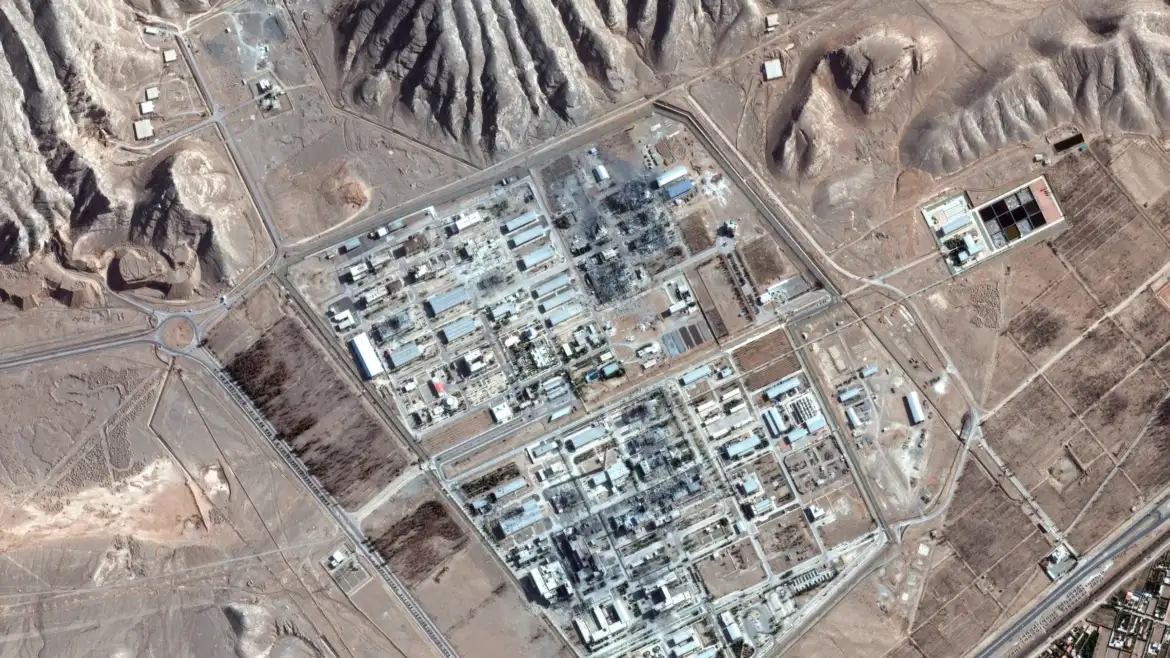
The remnants of the stockpile are thought to be stored deep in several badly damaged nuclear facilities in Isfahan, Fordow and Natanz.
“They haven’t been able to get to it, and at some point maybe we will,” Mr Trump told reporters earlier this month. “We haven’t gone after it, but it’s something we can do later on.”
Marco Rubio, the US secretary of state, told Congress: “People are going to have to go and get it.”
The president is encouraging his advisers to pressure Iran to surrender the material as a condition to ending the war, according to the Wall Street Journal. Failing that, the publication said military intervention was under consideration.
No order had been given as of March 30, but thousands of American troops have arrived in the region in recent days, with more en route.
Around 3,500 US troops arrived in the Middle East on Friday, including roughly 2,200 Marines, as part of a unit led by the USS Tripoli, an amphibious assault ship. Another 2,200 Marines are on their way, while thousands of troops from the 82nd Airborne Division have been ordered to the region.
Military experts have warned that any such raid would be fraught with risk, as well as being larger and more complex than America and Israel’s recent special forces victories.
The difficulties in safely finding and transporting the radioactive material mean such a mission could take days rather than minutes or hours.
It would also require hundreds of troops on the ground in enemy territory at one or more sites, in a sharp escalation of both military risk and commitment.
Such a snatch raid would require “potentially the largest special forces operation in history”, James Stavridis, a retired US admiral and former Nato commander, told the Wall Street Journal.
Before the June 2025 strikes, Iran was estimated to have more than 400kg (800lb) of 60 per cent highly enriched uranium, which could potentially be converted into 90 per cent, weapons-grade uranium.
Around half of that is still thought to be in a tunnel complex at a facility at Isfahan, the International Atomic Energy Agency has said. The facility was bombed in June, but Iran is thought to have been able to clear away debris and regain access.
Other stocks are potentially still deep in Fordow and Natanz, which were hit with massive US bunker buster bombs.
Iran has said its stockpile is “under rubble”.
However, US officials are said to be increasingly concerned that the stockpile might have been moved, or could be transferred soon.
Securing and removing such material would need not only elite forces, but also significant scientific know-how and training.
It would require special forces, such as US Delta Force troops, the equivalent of the UK’s Special Air Service (SAS).
Specialist personnel such as explosives experts and engineers with excavators to dig through debris would be needed. The mission would also need bomb disposal personnel in case the complexes had been booby-trapped.
The forces would be able to call on America’s massive aerial dominance over Iran, but would also need a protective cordon on the ground, in case of an Iranian counter-attack.
Potentially, that could include forces such as the 75th Ranger Regiment or the 82nd Airborne Division.
Getting to or from the sites would need MC-130J Super Hercules transporters or MH-47 Chinook helicopters.
Reports that at least six MC-130Js are now flying out of RAF Mildenhall in Suffolk have added to speculation that Washington is keeping its options open.
US special forces units regularly train to counter weapons of mass destruction, and the Pentagon has specialists in dismantling nuclear programmes. Handling the material would need particular care, experts have said.
The highly enriched uranium is thought to be stored as uranium hexafluoride gas in heavy metal cylinders.
Earlier this month, Cheryl Rofer, a retired nuclear scientist at the Los Alamos National Laboratory, estimated that the 400kg stockpile would comprise anywhere between 30 and 60 cylinders. They would have to be carefully stored to prevent a nuclear chain reaction.
Damage could also lead to exposure to toxic chemicals. If moisture enters transport or storage cylinders, uranium hexafluoride will react with the water to produce toxic uranyl fluoride and hydrofluoric acid gas.
“Logistically and tactically, this mission would be highly perilous, if not nearly impossible,” wrote François Diaz-Maurin in the Bulletin of the Atomic Scientists.
“Isfahan is located several hundred miles from the nearest US naval ships, requiring long-range transport through an active war zone. The US and Israeli air forces could provide air superiority to allow troops and equipment in and out of Isfahan.
“But special forces on the ground would still need to pass through Iranian security forces and bring in heavy equipment to dig the material out of tunnels, potentially damaged and filled with debris.”
Another option would be to destroy the stockpile in situ. That would be logistically easier, but could cause contamination. It might also be difficult to verify if the task has been completed.
In the past, the US has launched successful covert counter-proliferation operations, such as removing 600kg of uranium from Ulba in Kazakhstan in 1994. The “Project Sapphire” mission occured under peacetime conditions with the assistance of the host government.
Joseph Rodgers, from the Centre for Strategic and International Studies think tank, said last week: “In Iran, an operation to forcibly seize their stockpile would be quite different… Any operation to recover Iranian nuclear material comes with enormous risks.”
Perhaps the greatest of these would be the time that such an extraction could take.
Mr Rodgers added: “This operation could require hundreds or even over a thousand people, depending on how deep the material is buried and how many separate facilities it is in.”
Despite the dangers, the risk of leaving the uranium in Iran is potentially even greater.
Mr Rodgers said: “Several weapons’ worth of highly enriched uranium cannot be left unattended in Iran.
“The risk of government collapse, leaving weapons worth of highly enriched uranium unguarded, or of a future Iranian regime proliferating, is too high in the aftermath of Operation Epic Fury.”